Thursday, October 30, 2025

November Book Club Pick: "The Reason I Jump: The Inner Voice of a Thirteen-Year-Old Boy with Autism" by Naoki Higashida (Published August 27, 2013)


The Reason I Jump: The Inner Voice of a Thirteen-Year-Old Boy with Autism


An Editor’s Pick on Amazon - https://a.co/d/5lgiXIn

You’ve never read a book like The Reason I Jump. Written by Naoki Higashida, a very smart, very self-aware, and very charming thirteen-year-old boy with autism, it is a one-of-a-kind memoir that demonstrates how an autistic mind thinks, feels, perceives, and responds in ways few of us can imagine. Parents and family members who never thought they could get inside the head of their autistic loved one at last have a way to break through to the curious, subtle, and complex life within.
 
Using an alphabet grid to painstakingly construct words, sentences, and thoughts that he is unable to speak out loud, Naoki answers even the most delicate questions that people want to know. Questions such as: “Why do people with autism talk so loudly and weirdly?” “Why do you line up your toy cars and blocks?” “Why don’t you make eye contact when you’re talking?” and “What’s the reason you jump?” (Naoki’s answer: “When I’m jumping, it’s as if my feelings are going upward to the sky.”) With disarming honesty and a generous heart, Naoki shares his unique point of view not only on autism but on life itself. His insights—into the mystery of words, the wonders of laughter, and the elusiveness of memory—are so startling, so strange, and so powerful that you will never look at the world the same way again.
 
In his introduction, bestselling novelist David Mitchell writes that Naoki’s words allowed him to feel, for the first time, as if his own autistic child was explaining what was happening in his mind. “It is no exaggeration to say that 
The Reason I Jump allowed me to round a corner in our relationship.” This translation was a labor of love by David and his wife, KA Yoshida, so they could share that feeling with friends, the wider autism community, and beyond. Naoki’s book, in its beauty, truthfulness, and simplicity, is a gift to be shared.


#TheReasonIJump #Autism #DavidMitchell #KAYoshida

Saturday, October 18, 2025

“Unlocking Language: The Transformative Power of Storytelling in Child Development” by Rosalyn Pryor, M.S., CCC-SLP PLLC

Unlocking Language: The Transformative Power of Storytelling in Child Development


By Rosalyn Pryor, M.S., CCC-SLP


Storytelling is an age-old practice that serves as a fundamental means of communication and cultural transmission across generations. It holds a unique place in child development, particularly in fostering language skills. From ancient oral traditions to modern picture books, storytelling captivates the imagination and engages listeners, making it a powerful tool for learning. 


For children, stories do more than entertain; they provide a rich tapestry of language, imagery, and emotion that enhances cognitive and linguistic growth. As children immerse themselves in narratives, they encounter not only new words but also the structures and rhythms of language. This exposure is crucial for vocabulary expansion, as it enables children to connect meanings, develop comprehension skills, and express themselves more effectively. 


Moreover, storytelling nurtures creativity and critical thinking, encouraging children to explore their own ideas and articulate them in a meaningful way. By integrating storytelling into daily routines, parents and educators can create an enriching environment that supports children's language development and ignites a lifelong passion for reading and learning.


Here are some language-rich books that are highly recommended for preschool children, each offering engaging stories, rich vocabulary, and opportunities for discussion:


1. Where the Wild Things Are" by Maurice Sendak- This classic tale of imagination and adventure features descriptive language and invites children to explore emotions and creativity.


2.The Very Hungry Caterpillar" by Eric Carle - With its rhythmic text and vibrant illustrations, this book introduces vocabulary related to numbers, days of the week, and metamorphosis.


3. “Brown Bear, Brown Bear, What Do You See?" by Bill Martin Jr. and Eric Carle - This repetitive and rhythmic story encourages prediction and participation while introducing colors and animals.


4. Goodnight Moon" by Margaret Wise Brown - This beloved bedtime story features soothing, poetic language and introduces young readers to a variety of objects and concepts in a cozy setting.


5.Chicka Chicka Boom Boom" by Bill Martin Jr. and John Archambault** - This playful book uses rhythmic text and alliteration to teach the alphabet in a fun and engaging way.


6.The Snowy Day" by Ezra Jack Keats - This beautifully illustrated story captures the wonder of a snowy day, using descriptive language that invites children to explore sensory experiences.


7. Pete the Cat: I Love My White Shoes" by Eric Litwin and James Dean - With its catchy, repetitive song and colorful illustrations, this book encourages participation while introducing concepts of color and consequence.


8. Don't Let the Pigeon Drive the Bus!" by Mo Willems - This interactive story engages children with humor and dialogue, inviting them to respond to the pigeon's enthusiastic pleas and fostering expressive language.


9. Giraffes Can't Dance" by Giles Andreae and Guy Parker-Rees - This rhyming tale celebrates individuality and perseverance, using rich language and playful illustrations that inspire creativity.


10. The Gruffalo" by Julia Donaldson and Axel Scheffler - This clever and engaging story features humorous rhymes and a unique narrative structure, introducing vocabulary related to animals and bravery.


These books not only enhance vocabulary but also promote engagement, imagination, and a love for reading in preschool children.

Friday, October 17, 2025

Bridging Home and School: Essential Accommodations for Neurodiverse Children

Bridging Home and School:  Essential Accommodation for Neurodiverse Children

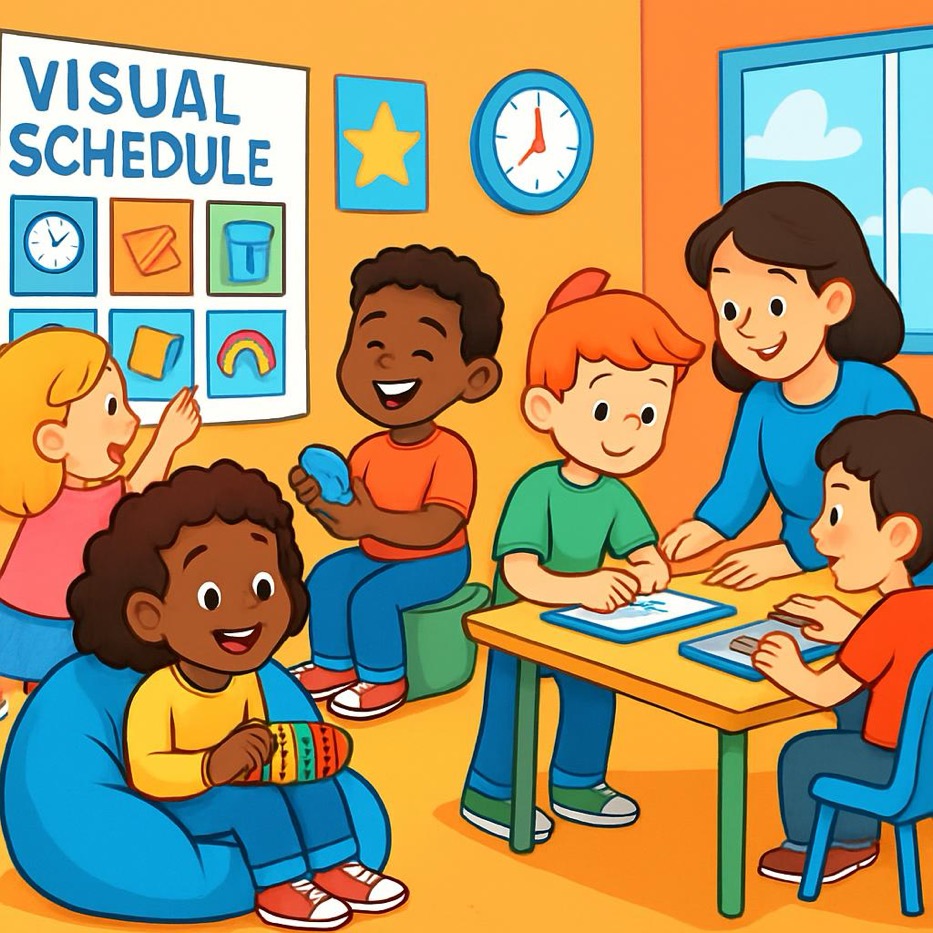
As a parent and advocate for children with neurodiversities, I've seen firsthand how simple accommodations can make a world of difference, both at home and in the classroom.  Whether it’s creating a quiet space for focused work or using visual schedules to help with transitions, these small changes are pivotal in fostering an environment where our kids can truly thrive.

In my experience, communication is key.  Engaging with teachers and understanding their perspectives allows us to collaborate effectively.  At home, I encouraged my children to express their needs, which not only empowered them but also helped me learn to better support them. 

Every child deserves a chance to shine, and with the right tools, we can help illuminate their unique paths. 

Here’s a list of accommodations that can be beneficial for parents to use at home with neurodiverse children:

  1. Structured Routines: Establish consistent daily schedules to provide predictability and security.
  2. Visual Supports: Use charts, pictures, or visual schedules to help with understanding tasks and routines.
  3. Quiet Spaces: Create a calm, distraction-free area where your child can retreat when feeling overwhelmed.
  4. Sensory Tools: Provide fidget toys, noise-canceling headphones, or weighted blankets to help manage sensory input.
  5. Flexible Learning Methods: Adapt learning approaches to match your child’s strengths, whether through hands-on activities, visual aids, or interactive lessons.
  6. Breaks and Downtime: Incorporate regular breaks during tasks to prevent frustration and fatigue.
  7. Clear Instructions: Use simple, direct language and break down tasks into manageable steps.
  8. Positive Reinforcement: Celebrate achievements, big or small, to boost confidence and motivation.
  9. Choice and Autonomy: Allow your child to have a say in their activities and routines to promote a sense of control.
  10. Social Stories: Create or use existing social stories to help your child understand social situations and expectations.
  11. Mindfulness Practices: Introduce mindfulness or relaxation techniques to help with emotional regulation.
  12. Assistive Technology: Utilize apps and tools designed to support learning and communication.

These accommodations can create a supportive and nurturing environment that encourages growth and development.

#Neurodiversity #Inclusion #Education #Parenting #SupportSystem

Monday, July 28, 2025

World Hepatitis Day | July 28

World Hepatitis Day | July 28


Protecting tiny livers, one child at a time.

Hepatitis is a silent threat that doesn’t care about age, innocence, or bedtime routines.


And here’s the truth: children are not immune.

Whether it’s Hepatitis A, B, or C, kids can be exposed early in life through unclean environments, lack of access to vaccines, or even during childbirth.  And many won’t show symptoms until damage is already done.

But here’s the good news:
Prevention is powerful.
Education is essential.
Advocacy is urgent.

Vaccinate early.  Hepatitis B vaccine is safe, effective, and life-saving—especially when given at birth.

Practice good hygiene.  Handwashing?  Still undefeated.
Teach and talk.  Kids listen.  They understand more than we give them credit for.

Our goal?  A future where no child has to fight a preventable liver disease.
Because children should be worried about monkey bars, not medical bills.

This World Hepatitis Day, let’s commit to making the invisible visible.
Speak up.  Show up.  Protect our littles.

#WorldHepatitisDay #ProtectKidsLivers #HepatitisAwareness #VaxTheFuture #TinyHumansBigProtection #PreventionPower

Sunday, July 20, 2025

National Immunization Awareness Month 2025

And guess what else is around the corner?

Yep—BACK TO  SCHOOL

...Let’s make it a TRIPLE check.

August is the perfect time to schedule that pediatric visit.  Not only is it thoughtful planning, it’s literally protecting your child—and everyone around them—from preventable illnesses like measles, whooping cough, and meningitis.

Let’s be real:

And your child’s shot record shouldn’t be a mystery wrapped in a manila folder from 2017.

Pro tip: Most schools require updated immunization records for enrollment anyway.  Getting ahead of it now = fewer last-minute panics and more time for first-day-of-school selfies.

So, whether your kiddo’s starting Pre-K, middle school, or heading into senior year—make sure they’re walking in with the full armour of modern medicine.

This August, let’s celebrate Immunization Month by doing what matters most:

Protecting the health of our kids, our schools, and our communities.

  • Call your pediatrician.
  • Update those records.
  • Start the school year STRONG.

#NationalImmunizationAwarenessMonth  #BackToSchoolReady  #VaccinesWork #ProtectOurKids  #WellChildCheck  #ImmunityIsCommunity #SchoolReadyStrong

Saturday, May 3, 2025

Beyond Boundaries: Discovering Inclusive Summer Adventures

Beyond Boundaries: Discovering Inclusive Summer Adventures

Summer is almost here, and it's time to make it unforgettable for every child! For families in Dallas-Fort Worth navigating the challenges of disabilities and tight budgets, the quest for the perfect summer camp can feel overwhelming. But fear not! The DFW area boasts a variety of inclusive, affordable, and even free summer camps designed to provide enriching experiences for children with diverse needs. From adaptive sports to creative arts, these camps are dedicated to ensuring every child has the opportunity to learn, grow, and have fun in a supportive environment. Let's dive into the options that make summer shine for all!


Inclusive & Low-Cost Summer Camps in Dallas-Fort Worth

1. Camp Summit – Paradise, TX

This residential camp caters to individuals with disabilities, emphasizing abilities over limitations. They offer a sliding scale fee structure and scholarships to ensure accessibility for all families. The camp provides a traditional experience with adapted activities in a barrier-free environment.Plano Moms+1Very Special Camps+1DFW Camp Expo+1Plano Moms+1

2. H.E.R.O.E.S. Camp – Dallas, TX

Serving special needs families in the Dallas area, H.E.R.O.E.S. offers six weeks of summer camp, along with programs during winter and spring breaks. They focus on inclusivity, ensuring no camper is turned away due to medical or behavioral challenges or financial status.DFW Camp Expo

3. Variety of Texas – Peaceable Kingdom – Killeen, TX

While headquartered in Austin, Variety of Texas conducts most of its programming at Peaceable Kingdom in Killeen. Their retreats and camps encourage children with special needs to build lifelong friendships and community, focusing on physical achievement, social development, and education through specialized activities.Variety of Texas

4. Camp For All – Burton, TX

This barrier-free camp partners with over 65 organizations to provide inclusive experiences for children and adults with special needs. Activities range from aquatic adventures to arts and crafts, all tailored to individual abilities. They are committed to keeping campers physically and emotionally safe while fostering independence.Navigate Life Texas+17Camp For All+17DFWChild+17

5. Charis Hills Camp – Sunset, TX

A Christian summer camp designed for kids with learning differences and social difficulties, including ADD, ADHD, and high-functioning autism. They combine recreation with learning to help campers improve social skills and boost self-esteem.Plano Moms

6. It’s a Sensory World – Farmers Branch, TX

Welcoming children of all abilities aged 2 and up, this camp offers programs that include art, music, field trips, and sensory gym time. Campers are grouped based on developmental level, needs, interests, and talents.Plano Moms

7. Texas Lions Camp – Kerrville, TX

This week-long sleepaway camp caters to children with physical disabilities, Down syndrome, and Type-1 diabetes. They provide specialist staff and medical support, ensuring a safe and inclusive environment for all campers.Plano Moms+1DFW Camp Expo+1


Notable Camps for Children with Disability Camps Across the U.S.

1. Camp Lee Mar – Pennsylvania

Established in 1953, Camp Lee Mar is a pioneering overnight summer camp for children with special needs. Located in Lackawaxen, PA, it offers a seven-week program focusing on therapeutic recreation and academic enrichment. The camp emphasizes what children can achieve, fostering independence and self-confidence.Time

2. Easterseals Camps – Nationwide

Easterseals operates various summer camps across the U.S. for children with disabilities. These camps focus on social interaction, skill-building, and recreational activities in an inclusive setting. They offer both day and overnight options, featuring activities like adaptive sports and nature exploration.TulsaKids Magazine+2Wampler Foundation+2HubPages+2

3. Camp Krem (Camping Unlimited) – California

Located near Yosemite National Park, Camp Krem provides year-round programs and summer sessions for children and adults with developmental disabilities. Activities include music, arts and crafts, hiking, and swimming, all designed to foster independence and social skills.Wikipedia

4.  Zeno Mountain Farm – Vermont

Zeno Mountain Farm hosts camps for people with and without disabilities, focusing on creative projects like filmmaking and theater. Located in Bristol, VT, the camp promotes inclusivity and community through collaborative activities.Wikipedia

5.  Camp High Hopes – Iowa

Situated in Sioux City, IA, Camp High Hopes offers programs for children, teens, and adults with disabilities and chronic illnesses. The camp offers a variety of activities to foster independence, social connections, and personal growth.Care.com

6.  Camp Blue Skies – North & South Carolina, Georgia

Camp Blue Skies offers weeklong camps for adults with intellectual disabilities. Operating in North and South Carolina and Georgia, the camp focuses on providing social and recreational opportunities to help campers build confidence and life skills.WSJ

Finding the Right Camp

To explore more options tailored to specific needs, consider visiting VerySpecialCamps.com, which offers a comprehensive directory of special needs camps across the U.S. You can filter camps by state, program emphasis, and type (day, residential, travel, respite).Very Special Camps+3Very Special Camps+3Very Special Camps+3Very Special Camps


Monday, April 28, 2025

MAY 2025 | BOOK CLUB READ: Beautiful People - My Thirteen Truths About Disability By Melissa Blake


This month, we’re spotlighting Beautiful People: My Thirteen Truths About Disability by Melissa Blake—a compelling memoir that offers insight and inspiration.

Melissa Blake, a renowned disability activist and writer, shares her personal journey navigating life with Freeman-Sheldon syndrome. Through 13 candid essays, she delves into topics such as self-image, societal perceptions, and the importance of representation. Book of the Month for Parents of Neurodiverse and Disabled Children 

This month, we’re spotlighting Beautiful People: My Thirteen Truths About Disability by Melissa Blake—a compelling memoir that offers insight and inspiration.​​

Available in hardcover, eBook, and audiobook formats. https://a.co/d/3jm3TK5

#BeautifulPeople #MelissaBlake #DisabilityAwareness #Neurodiversity #ParentingResources #BookOfTheMonth

Her story is about challenges and resilience, empowerment, and the beauty of embracing one’s identity. It’s a must-read for parents, educators, and anyone seeking to understand the lived experiences of those with disabilities.

What are your thoughts?  Comment here.

Saturday, April 26, 2025

Privacy Policy for GrowOneChild.blogspot.com

Privacy Policy for GrowOneChild.blogspot.com


Effective Date: April 26, 2025

Introduction
Welcome to GrowOneChild.blogspot.com (“we,” “our,” “us”).  Your privacy matters deeply to us.  We are committed to protecting any information you share with us and being transparent about how we collect, use, and safeguard your data.

This Privacy Policy explains what information we collect, why we collect it, and how we handle it responsibly.


1.  Information We Collect

We collect minimal personal information.  Here’s what we may collect:

  • Information You Voluntarily Provide:

    • If you leave a comment, sign up for email updates, or contact us directly, you may provide your name, email address, or other contact information.

  • Automatically Collected Information:

    • Like most websites, we collect certain non-personal information automatically, such as:

      • IP address

      • Browser type

      • Device type

      • Pages visited

      • Time spent on pages

      • Referring to website addresses

  • Cookies and Tracking Technologies:

    • We use cookies to enhance user experience, understand site traffic, and serve relevant content or advertisements.


2.  How We Use Your Information

We use the information collected for legitimate purposes, such as:

  • To operate and maintain our website.

  • To respond to your comments or inquiries.

  • To improve site content and user experience.

  • To monitor and analyze trends and usage patterns.

  • To comply with legal obligations.

We do not use your data to spam you, stalk you, or sell you out.  Ever.


3.  Third-Party Services

We may work with third-party services (e.g., Google Analytics, Blogger, Google AdSense) that may collect data for their own legitimate purposes.
Please note:

  • These third-party services have their own privacy policies.

  • We do not control how third parties collect, use, or disclose your information.

  • We aim to partner only with reputable services that value user privacy.


4. Children’s Privacy

GrowOneChild.blogspot.com is intended for general audiences, including parents, educators, and advocates.

We do not knowingly collect personal information from children under 13.

If we discover we have inadvertently collected information from a child under 13 without parental consent, we will promptly delete it.


5.  Data Retention

We retain personal information only for as long as necessary:

  • To fulfill the purposes outlined in this Privacy Policy.

  • To comply with legal obligations.

  • To resolve disputes and enforce our agreements.

When no longer needed, your information will be securely deleted.


6.  Your Privacy Rights

Depending on your location (e.g., California, EU countries), you may have specific rights regarding your personal data, including:

  • The right to access your data.

  • The right to correct inaccurate data.

  • The right to request deletion of your data.

  • The right to object to or restrict data processing.

You can exercise your rights by contacting us at growonechild@gmail.com.


7.  Data Security

We maintain reasonable administrative, technical, and physical safeguards to protect your information from unauthorized access, use, or disclosure.
However, no system can guarantee complete security — be mindful and protect your personal data online.


8.  Changes to This Privacy Policy

We may update this Privacy Policy from time to time to reflect changes in legal requirements, best practices, or site operations.
When changes occur, we will update the “Effective Date” and post a notice prominently.


9.  Contact Us

If you have any questions, concerns, or requests regarding this Privacy Policy or your data, please reach out:

📧 growonechild@gmail.com


Final Word

You deserve to feel safe and respected when you visit GrowOneChild.blogspot.com.
We don’t just talk the talk — we genuinely care about doing right by you.
Thanks for trusting us.


THIS WEEK'S FEATURED POST

Nostalgia and Play: Reflections from an Speech Pathologist

  The 1990s and early 2000s were pivotal years for childhood, shaping how today’s kids engage in play, learning, and social interactions. Ch...

POPULAR POSTS THIS MONTH